
Tlingit
Southeast Alaska, British Columbia, Yukon TlingitEnglish
The Tlingit are an Indigenous people of the Pacific Northwest Coast of North America, known for their rich cultural heritage, complex social structures, and deep connection to the land and sea.
Historical Context
The Tlingit have inhabited the coastal regions of Southeast Alaska for thousands of years. Their history is marked by a strong maritime culture, trade networks, and resistance to colonization.
Migration Patterns
Historically, the Tlingit migrated seasonally between summer fishing camps and winter villages. Some groups moved inland for trade and hunting.
Conflict And Resilience History
The Tlingit resisted Russian and later American colonization efforts, maintaining their cultural practices and autonomy through strategic alliances and adaptation.
Diaspora Perspectives
Tlingit people living outside their traditional territories often maintain strong cultural ties through community events and cultural organizations.
Regional Variations
There are regional differences in dialects, clan structures, and artistic styles among the Tlingit communities.
Bridging Notes
Efforts to bridge traditional Tlingit culture with modern society include cultural education programs and the revitalization of the Tlingit language.
Spiritual And Religious Practices
Tlingit spirituality is deeply connected to the natural world, with a belief in the interconnectedness of all living things. Ceremonies and rituals often honor ancestors and the spirits of the land and sea.
Beliefs And Worldview
The Tlingit worldview emphasizes respect for nature, community, and the wisdom of elders. Storytelling and oral traditions are vital for passing down knowledge and values.
Cultural Proverbs Sayings
Tlingit proverbs often reflect themes of respect, community, and the importance of maintaining balance with nature.
Naming Conventions And Terms Of Address
Names are significant in Tlingit culture, often reflecting clan affiliations and ancestral connections. Terms of address are used to show respect and acknowledge social status.
Health And Mental Health
Traditional Tlingit health practices include the use of medicinal plants and spiritual healing. There is a growing integration of traditional and Western medicine.
Mental Health Views
Mental health is viewed holistically, with an emphasis on community support and the balance between mind, body, and spirit.
Traditional Healers
Traditional healers, often elders or shamans, play a crucial role in maintaining health through spiritual and herbal remedies.
Gender Roles In Healthcare
Historically, women have been primary caregivers, but both men and women participate in healing practices.
Healthcare Barriers
Barriers include access to culturally sensitive healthcare and the need for more integration of traditional practices in modern healthcare systems.
Education And Learning Styles
Tlingit education traditionally involves experiential learning, storytelling, and the transmission of knowledge through elders.
Learning Styles
Learning is often hands-on and community-based, with an emphasis on observation and practice.
Parental Engagement
Parents and extended family members are actively involved in the education of children, teaching cultural values and skills.
Family And Social Structure
The Tlingit have a matrilineal clan system, where lineage and inheritance are traced through the mother's line. Clans are central to social organization.
Discipline And Behavior
Discipline is often community-based, with an emphasis on teaching through example and storytelling.
Authority Attitudes
Elders hold significant authority and respect within the community, guiding decisions and maintaining cultural traditions.
Etiquette And Customs
Respect for elders, communal sharing, and hospitality are key aspects of Tlingit etiquette.
Community Strengths Resilience
The Tlingit community is known for its resilience, cultural pride, and ability to adapt while maintaining traditional practices.
Art Music And Expression
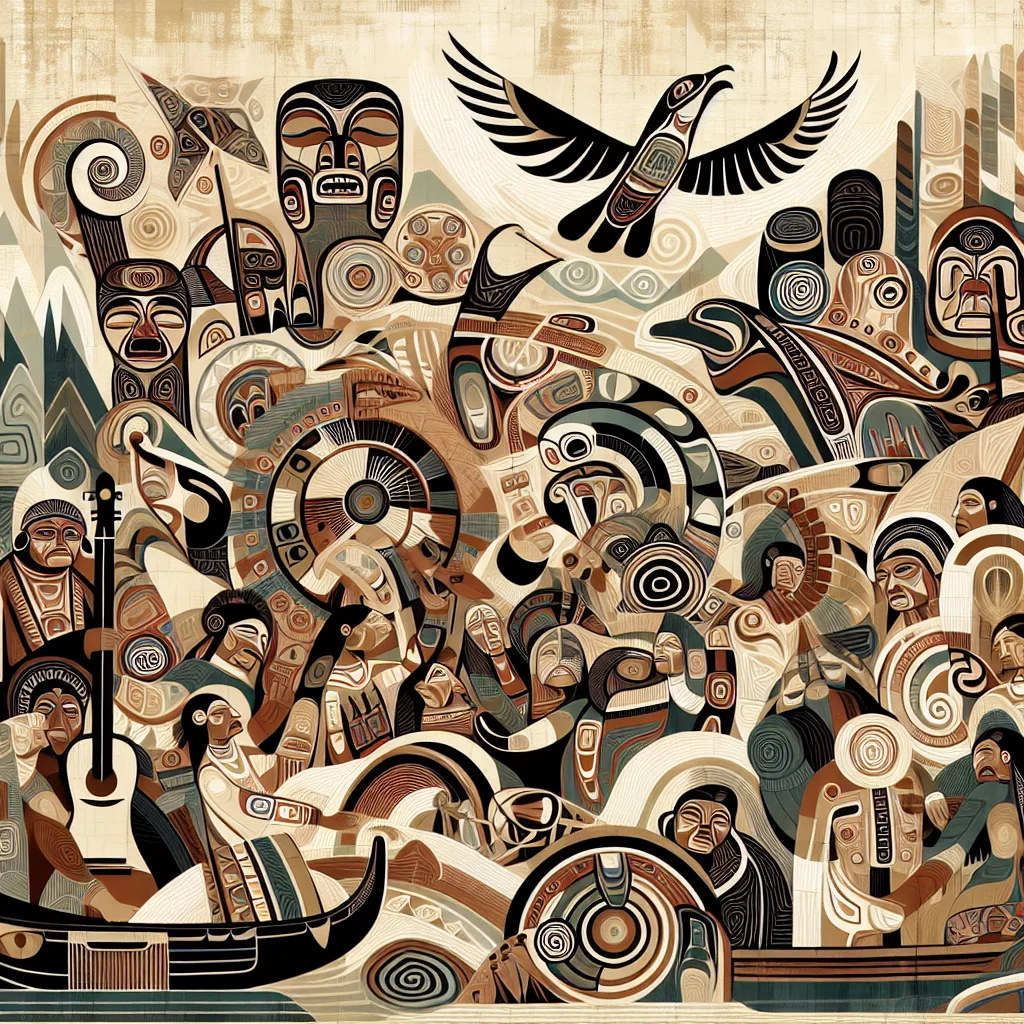
Tlingit art is renowned for its totem poles, carvings, and weaving. Music and dance are integral to ceremonies and storytelling.
Cultural Symbols Motifs
Common motifs include animals, clan symbols, and natural elements, often depicted in a distinctive formline style.
What Brings Joy
Community gatherings, storytelling, and the celebration of cultural traditions bring joy to the Tlingit people.
Celebrations Joyful Traditions
Potlatches and other communal feasts are important celebrations that reinforce social bonds and cultural identity.
Cultural Calendar And Holidays
Traditional events are often tied to the seasonal cycle, such as fishing and hunting seasons.
Additional Notes
The revitalization of Tlingit language and arts is a source of pride and cultural renewal.
Economic Context And Occupations
Historically, the Tlingit economy was based on fishing, hunting, and trade. Today, many Tlingit are involved in tourism, arts, and cultural preservation.
Housing And Living Arrangements
Traditional housing included large communal houses made of wood. Modern housing varies, with efforts to incorporate traditional designs.
Nutrition And Dietary Norms
The Tlingit diet traditionally includes fish, game, and wild plants. There is a focus on sustainable harvesting practices.
Interpretation Needs
There is a need for Tlingit language interpretation services, especially for elders who may be more fluent in Tlingit than English.
Interpreter Notes
Interpreters should be familiar with Tlingit cultural nuances and respectful of traditional communication styles.
Documentation Traditions
Oral history is a key tradition, with efforts to document stories and language through recordings and written materials.
Interactions With Other Cultures
The Tlingit have a history of trade and interaction with neighboring Indigenous groups and later with European settlers.
Conflict Resolution Mechanisms
Traditional conflict resolution involves community dialogue and the guidance of elders.
Cultural Exchange Programs
There are programs aimed at cultural exchange and education between Tlingit and other communities.
Trade Relations
Historically, the Tlingit engaged in extensive trade networks, exchanging goods with other Indigenous groups and settlers.
Shared Artistic Projects
Collaborative art projects often focus on cultural preservation and education.
Intercultural Marriages
Intermarriage with other Indigenous groups and settlers has occurred, influencing cultural practices.
Shared Educational Initiatives
Educational initiatives often focus on language preservation and cultural awareness.
Youth Perspectives
Tlingit youth are increasingly involved in cultural revitalization efforts, balancing modern influences with traditional values.
Education Initiatives
Programs focus on teaching Tlingit language and culture to younger generations.
Future Challenges
Challenges include maintaining cultural identity in a rapidly changing world and addressing socio-economic issues.
Youth Employment Trends
Many young Tlingit are pursuing careers in cultural preservation, education, and the arts.
Future Visions
There is a strong vision for a future where Tlingit culture is vibrant and integrated into modern life.
Youth Leadership Roles
Youth are encouraged to take on leadership roles in cultural and community organizations.
Innovation And Startups
There is growing interest in entrepreneurship, particularly in areas that promote cultural heritage and sustainability.
Festivals And Celebrations
Festivals such as the Celebration event in Juneau highlight Tlingit culture through dance, music, and art.
Traditional Medicine Practices
Traditional medicine includes the use of local plants and spiritual healing practices.
Environmental Practices
Sustainable fishing and hunting practices are central to Tlingit environmental stewardship.
Rituals
Rituals often mark important life events and seasonal changes, reinforcing community bonds.
Rites Of Passage
Rites of passage, such as coming-of-age ceremonies, are important for cultural continuity.
Culinary Traditions
Traditional foods include salmon, herring eggs, and berries, often prepared using methods passed down through generations.
Climate Adaptation Strategies
The Tlingit are actively involved in climate adaptation efforts, drawing on traditional ecological knowledge.
Biodiversity Conservation
Conservation efforts focus on protecting the rich biodiversity of Tlingit lands and waters.
Sustainable Tourism Practices
Tourism initiatives emphasize cultural education and environmental sustainability.
Renewable Energy Use
There is interest in renewable energy projects that align with traditional values of environmental stewardship.
Community Involvement In Practices
Community involvement is key in environmental and cultural practices, ensuring that traditions are upheld.
Environmental Education Programs
Programs aim to educate both Tlingit youth and the broader public about sustainable practices and cultural heritage.
Notable Figures
Notable Tlingit figures include Elizabeth Peratrovich, a civil rights leader, and Nathan Jackson, a renowned artist.
Cultural Innovations
The Tlingit have contributed to the development of complex social structures and art forms unique to the Pacific Northwest.
Literary Works
Tlingit oral literature is rich with myths, legends, and historical narratives, some of which have been transcribed and published.
Architectural Styles
Traditional Tlingit architecture includes large communal houses and intricately carved totem poles.
Scientific Contributions
Traditional ecological knowledge of the Tlingit contributes to modern environmental science and conservation efforts.
Culinary Innovations
Tlingit culinary practices emphasize sustainable harvesting and preparation methods that are gaining recognition.
Global Influence
Tlingit art and cultural practices have influenced broader Indigenous and non-Indigenous communities worldwide.
Awards And Recognition
Tlingit individuals and organizations have received recognition for their contributions to cultural preservation and civil rights.
Modern Influences
Modern influences include the integration of technology and contemporary art forms into traditional practices.
Digital Presence
There is a growing digital presence with online platforms promoting Tlingit language and culture.
Globalization Effects
Globalization presents both challenges and opportunities for cultural exchange and preservation.
Urbanization Effects
Urbanization has led to changes in traditional living patterns, with efforts to maintain cultural connections in urban settings.
Technology Adoption
Technology is used to document and share Tlingit culture, including language apps and digital archives.
Hybrid Cultural Forms
Hybrid forms of art and expression blend traditional Tlingit elements with contemporary styles.
Social Media Presence
Social media is used to connect Tlingit communities and share cultural knowledge globally.
Challenges
Challenges include cultural preservation in the face of modernization, language revitalization, and socio-economic disparities.
Preservation Efforts
Efforts include language revitalization programs, cultural education initiatives, and the documentation of oral histories.
Cultural Artwork
Community Discussion
Further Reading
Explore credible external sources to deepen your understanding of Tlingit culture.