
Filipino American
United States EnglishTagalogIlocanoCebuano
Filipino-American culture is a vibrant blend of Filipino and American influences, reflecting the history, traditions, and values of both cultures.
Historical Context
Filipino migration to the United States began in the late 19th century, with significant waves occurring after World War II and during the 1960s and 1970s due to changes in U.S. immigration laws.
Migration Patterns
Early Filipino immigrants were primarily laborers in agriculture and canneries, while later waves included professionals such as nurses and engineers.
Conflict And Resilience History
Filipino-Americans have faced challenges such as discrimination and cultural assimilation, yet have shown resilience through community building and advocacy.
Diaspora Perspectives
The Filipino diaspora in America maintains strong ties to the Philippines, often participating in cultural events and remittances.
Regional Variations
Filipino-American communities are prominent in California, Hawaii, and New York, each with unique cultural expressions.
Bridging Notes
Filipino-Americans often serve as cultural bridges, promoting understanding and collaboration between the Philippines and the United States.
Spiritual And Religious Practices
Predominantly Roman Catholic, with a growing number of Protestant and non-denominational Christians, as well as some indigenous and syncretic practices.
Beliefs And Worldview
A strong belief in family unity, respect for elders, and the importance of education and hard work.
Cultural Proverbs Sayings
Common sayings include 'Bahala na' (Leave it to fate) and 'Utang na loob' (Debt of gratitude).
Naming Conventions And Terms Of Address
Filipino-Americans often use both American and Filipino naming conventions, with terms of respect such as 'Ate' (older sister) and 'Kuya' (older brother).
Health And Mental Health
Health practices often blend Western medicine with traditional Filipino remedies. Mental health is sometimes stigmatized, but awareness is growing.
Mental Health Views
Mental health issues are often underreported due to stigma, but community initiatives are working to increase awareness and support.
Traditional Healers
Some Filipino-Americans consult traditional healers known as 'albularyo' or 'hilot' for holistic treatments.
Gender Roles In Healthcare
Women often play a central role in family healthcare decisions, reflecting traditional gender roles.
Healthcare Barriers
Barriers include language differences, lack of culturally competent care, and limited access to healthcare services.
Education And Learning Styles
Education is highly valued, with an emphasis on academic achievement and respect for teachers.
Learning Styles
Learning often involves a mix of collaborative and individual approaches, with a strong focus on memorization and discipline.
Parental Engagement
Parents are highly involved in their children's education, often participating in school activities and encouraging higher education.
Family And Social Structure
Family is the cornerstone of Filipino-American life, often extending beyond the nuclear family to include a wide network of relatives.
Discipline And Behavior
Discipline is often strict, with an emphasis on respect for authority and elders.
Authority Attitudes
Respect for authority figures, such as parents and teachers, is deeply ingrained.
Etiquette And Customs
Hospitality is a key value, with customs such as 'pasalubong' (bringing gifts) and 'mano po' (a gesture of respect to elders).
Community Strengths Resilience
Strong community networks provide support and resilience, with organizations often focused on cultural preservation and advocacy.
Art Music And Expression
Filipino-American expression includes a rich tapestry of music, dance, and visual arts, often blending traditional Filipino elements with contemporary American styles.
Cultural Symbols Motifs
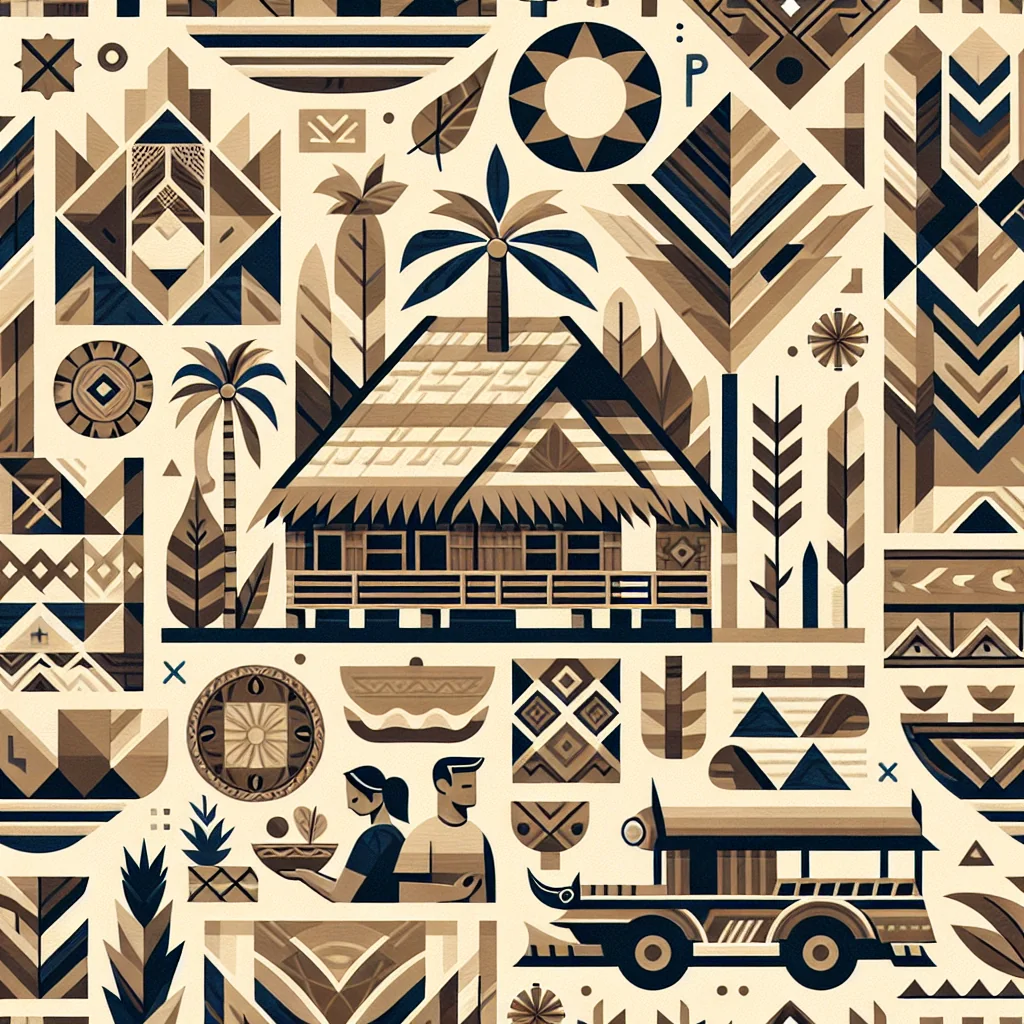
Symbols such as the 'bahay kubo' (nipa hut) and 'jeepney' are iconic, representing Filipino heritage and ingenuity.
What Brings Joy
Family gatherings, community festivals, and shared meals bring joy and strengthen bonds.
Celebrations Joyful Traditions
Celebrations such as 'Fiesta', 'Simbang Gabi', and 'Pasko' (Christmas) are important cultural events.
Cultural Calendar And Holidays
Key holidays include Philippine Independence Day, Barrio Fiesta, and various religious observances.
Additional Notes
Filipino-American culture is dynamic, continuously evolving through interactions with broader American society.
Economic Context And Occupations
Filipino-Americans are represented in diverse fields, including healthcare, technology, and education, with a significant number in nursing and caregiving professions.
Housing And Living Arrangements
Many Filipino-Americans live in multigenerational households, reflecting cultural values of family support and cohesion.
Nutrition And Dietary Norms
Dietary practices often include a mix of Filipino and American cuisines, with staples such as rice, fish, and vegetables.
Interpretation Needs
Language services are often needed for older generations who may be more comfortable in Filipino languages.
Interpreter Notes
Interpreters should be aware of cultural nuances and respect the importance of family involvement in communication.
Documentation Traditions
Documentation often includes both English and Filipino languages, especially for cultural and religious events.
Interactions With Other Cultures
Filipino-Americans engage actively with other cultural groups, often participating in multicultural events and initiatives.
Conflict Resolution Mechanisms
Conflict resolution often involves community dialogue and mediation, emphasizing harmony and mutual respect.
Cultural Exchange Programs
Programs promoting cultural exchange between the Philippines and the U.S. are common, fostering mutual understanding.
Trade Relations
Filipino-Americans contribute to trade relations through business ventures and community networks.
Shared Artistic Projects
Collaborative artistic projects often highlight the fusion of Filipino and American cultural elements.
Intercultural Marriages
Intercultural marriages are common, reflecting the integration of Filipino-Americans into broader American society.
Shared Educational Initiatives
Educational initiatives often focus on cultural heritage preservation and promoting diversity in schools.
Youth Perspectives
Filipino-American youth often navigate dual identities, balancing cultural heritage with American societal norms.
Education Initiatives
Initiatives focus on promoting STEM education and cultural awareness among Filipino-American youth.
Future Challenges
Challenges include maintaining cultural identity and addressing issues of representation and inclusion.
Youth Employment Trends
Youth are increasingly entering diverse fields, with a growing presence in technology and creative industries.
Future Visions
Future visions include greater representation in leadership roles and continued cultural preservation.
Youth Leadership Roles
Youth are taking on leadership roles in community organizations and advocacy groups.
Innovation And Startups
There is a growing trend of Filipino-American youth engaging in startups and entrepreneurial ventures.
Festivals And Celebrations
Festivals such as 'Barrio Fiesta' and 'Pistahan' celebrate Filipino culture and community spirit.
Traditional Medicine Practices
Traditional practices include the use of herbal remedies and massage techniques like 'hilot'.
Environmental Practices
Community gardens and sustainable practices are promoted within Filipino-American communities.
Rituals
Rituals often blend Catholic traditions with indigenous Filipino practices, especially in life events like weddings and baptisms.
Rites Of Passage
Rites of passage such as 'debut' (18th birthday celebration) are significant cultural milestones.
Culinary Traditions
Culinary traditions include dishes like 'adobo', 'lumpia', and 'pancit', often shared during communal gatherings.
Climate Adaptation Strategies
Community efforts focus on promoting sustainable living and environmental awareness.
Biodiversity Conservation
Some Filipino-American groups are involved in conservation efforts, both locally and in the Philippines.
Sustainable Tourism Practices
Efforts are made to promote tourism that respects cultural heritage and environmental sustainability.
Renewable Energy Use
There is growing interest in renewable energy solutions within the community.
Community Involvement In Practices
Community involvement is strong in cultural and environmental initiatives, often led by local organizations.
Environmental Education Programs
Programs aim to educate the community about environmental issues and sustainable practices.
Notable Figures
Notable Filipino-Americans include figures like Jose Antonio Vargas, Lea Salonga, and Rob Bonta.
Cultural Innovations
Innovations include the fusion of Filipino and American culinary arts and the promotion of Filipino martial arts.
Literary Works
Filipino-American authors contribute to literature with works exploring identity and diaspora experiences.
Architectural Styles
Architectural contributions often reflect a blend of Filipino and American design elements.
Scientific Contributions
Filipino-Americans have made significant contributions in fields like medicine, technology, and engineering.
Culinary Innovations
Culinary innovations include popularizing Filipino dishes in mainstream American cuisine.
Global Influence
Filipino-American culture influences global perspectives on multiculturalism and diversity.
Awards And Recognition
Filipino-Americans have received recognition in various fields, including arts, sciences, and public service.
Modern Influences
Modern influences include the integration of digital technology and social media into cultural practices.
Digital Presence
A strong digital presence is maintained through social media platforms and online communities.
Globalization Effects
Globalization has led to increased cultural exchange and the blending of Filipino and American cultural elements.
Urbanization Effects
Urbanization has influenced lifestyle changes, with more Filipino-Americans living in metropolitan areas.
Technology Adoption
High rates of technology adoption are seen, particularly among the younger generation.
Hybrid Cultural Forms
Hybrid cultural forms emerge in music, fashion, and art, reflecting the fusion of Filipino and American influences.
Social Media Presence
Social media is a key platform for cultural expression and community engagement among Filipino-Americans.
Challenges
Challenges include preserving cultural identity amidst assimilation pressures and addressing issues of representation.
Preservation Efforts
Efforts are made to preserve language, traditions, and cultural practices through community programs and education.
Cultural Artwork
Community Discussion
Further Reading
Explore credible external sources to deepen your understanding of Filipino American culture.