
Asturians
Asturias, Spain AsturianSpanish
Asturians are an ethnic group native to the autonomous community of Asturias in northwestern Spain, known for their rich cultural heritage, distinct language, and vibrant traditions.
Historical Context
Asturias has a rich history dating back to pre-Roman times. It was one of the few regions in Spain that resisted Moorish conquest, maintaining its independence and becoming a Christian stronghold.
Migration Patterns
Historically, Asturians have migrated to Latin America and other parts of Spain, particularly during economic hardships.
Conflict And Resilience History
Asturias played a significant role in the Spanish Civil War, with notable resistance movements. The region has a history of resilience against external influences.
Diaspora Perspectives
Asturian communities abroad maintain strong ties to their homeland, often celebrating traditional festivals and preserving their language.
Regional Variations
Within Asturias, there are variations in dialects and customs, particularly between coastal and mountainous areas.
Bridging Notes
Asturians have successfully integrated modern influences while preserving their distinct cultural identity.
Spiritual And Religious Practices
Predominantly Roman Catholic, with local traditions and festivals often having religious significance.
Beliefs And Worldview
Asturians value community, family, and tradition. They have a strong connection to their land and heritage.
Cultural Proverbs Sayings
Asturian proverbs often reflect wisdom about nature, community, and resilience.
Naming Conventions And Terms Of Address
Traditional Asturian names are often used, with a preference for familial and respectful terms of address.
Health And Mental Health
Asturians have access to Spain's public healthcare system, with traditional remedies still used in some rural areas.
Mental Health Views
Mental health is increasingly recognized, with a growing acceptance of seeking professional help.
Traditional Healers
Herbal remedies and traditional healers are part of the cultural heritage, especially in rural communities.
Gender Roles In Healthcare
Healthcare roles are traditionally gendered, but there is a growing presence of women in medical professions.
Healthcare Barriers
Rural areas may face challenges in accessing specialized healthcare services.
Education And Learning Styles
Education is highly valued, with a focus on both traditional knowledge and modern academic achievement.
Learning Styles
Asturians often prefer collaborative and practical learning approaches.
Parental Engagement
Parents are actively involved in their children's education, often participating in school activities and decisions.
Family And Social Structure
Family is central to Asturian life, with extended family networks playing a significant role.
Discipline And Behavior
Respect for elders and community norms is emphasized, with discipline often being a communal responsibility.
Authority Attitudes
There is respect for authority figures, but also a strong sense of local autonomy and self-governance.
Etiquette And Customs
Hospitality is a key aspect, with customs emphasizing politeness and respect in social interactions.
Community Strengths Resilience
Asturian communities are known for their solidarity, mutual support, and resilience in the face of challenges.
Art Music And Expression
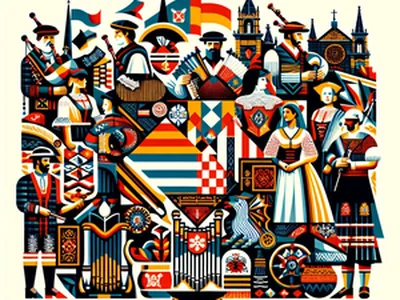
Asturian music, particularly the use of bagpipes, is a vibrant part of cultural expression. Traditional dances and folk songs are also popular.
Cultural Symbols Motifs
The Asturian flag and the 'Cruz de la Victoria' are important cultural symbols.
What Brings Joy
Community gatherings, music, and festivals bring joy to Asturians, fostering a strong sense of identity.
Celebrations Joyful Traditions
Festivals like 'Día de Asturias' and 'Fiesta de San Mateo' are celebrated with music, dance, and traditional foods.
Cultural Calendar And Holidays
Asturians celebrate both national and regional holidays, with a calendar rich in cultural and religious events.
Additional Notes
Asturian culture is characterized by a blend of tradition and modernity, with a strong emphasis on preserving cultural heritage.
Economic Context And Occupations
Historically reliant on mining and agriculture, the economy is diversifying into services and tourism.
Housing And Living Arrangements
Housing varies from urban apartments to rural homes, with a trend towards sustainable living.
Nutrition And Dietary Norms
Asturian cuisine is hearty, featuring dishes like 'fabada' and 'cachopo', with cider being a popular beverage.
Interpretation Needs
While Spanish is widely spoken, there may be a need for Asturian interpretation in cultural contexts.
Interpreter Notes
Interpreters should be aware of regional dialects and cultural nuances.
Documentation Traditions
Asturian literature and oral traditions are important, with efforts to document and preserve the language.
Interactions With Other Cultures
Asturians have historically interacted with neighboring regions and cultures, sharing traditions and customs.
Conflict Resolution Mechanisms
Community-based approaches and dialogue are preferred for resolving conflicts.
Cultural Exchange Programs
There are initiatives to promote cultural exchange, particularly with other Spanish regions.
Trade Relations
Historically, Asturias engaged in trade of agricultural and mining products.
Shared Artistic Projects
Collaborations in music and arts with other regions are common.
Intercultural Marriages
Intercultural marriages are accepted, often enriching cultural diversity.
Shared Educational Initiatives
Educational programs often include cultural exchanges with other regions.
Youth Perspectives
Asturian youth are increasingly engaged in preserving their cultural heritage while embracing modernity.
Education Initiatives
Programs focus on bilingual education and cultural heritage preservation.
Future Challenges
Economic diversification and youth employment are ongoing challenges.
Youth Employment Trends
There is a shift towards service industries and technology sectors.
Future Visions
Asturians envision a future that balances tradition with innovation.
Youth Leadership Roles
Youth are encouraged to take leadership roles in cultural and community initiatives.
Innovation And Startups
There is a growing startup culture, particularly in technology and sustainable practices.
Festivals And Celebrations
Festivals are integral, celebrating historical events, religious traditions, and seasonal changes.
Traditional Medicine Practices
Herbal remedies and traditional healing practices are part of the cultural heritage.
Environmental Practices
Asturians have a strong tradition of environmental stewardship, with practices aimed at preserving natural landscapes.
Rituals
Rituals often involve music, dance, and communal gatherings, reflecting a deep connection to tradition.
Rites Of Passage
Rites of passage, such as baptisms and weddings, are celebrated with traditional customs.
Culinary Traditions
Asturian cuisine is known for its hearty dishes, with a focus on local ingredients and traditional recipes.
Climate Adaptation Strategies
Efforts are underway to adapt to climate change, focusing on sustainable agriculture and energy use.
Biodiversity Conservation
Conservation programs aim to protect the region's rich biodiversity, including its unique flora and fauna.
Sustainable Tourism Practices
Tourism initiatives emphasize sustainability, promoting eco-friendly practices and cultural heritage.
Renewable Energy Use
Asturias is investing in renewable energy sources, such as wind and hydroelectric power.
Community Involvement In Practices
Community involvement is key in environmental and cultural preservation efforts.
Environmental Education Programs
Programs focus on educating the public about environmental conservation and sustainable practices.
Notable Figures
Figures like King Pelayo and writer Ramón Pérez de Ayala are celebrated in Asturian history.
Cultural Innovations
Asturians have contributed to cultural innovations in music, literature, and art.
Literary Works
Asturian literature includes works in both Asturian and Spanish, reflecting the region's cultural richness.
Architectural Styles
Asturian architecture features Romanesque and pre-Romanesque styles, with unique regional characteristics.
Scientific Contributions
Asturians have made contributions in fields like mining engineering and environmental sciences.
Culinary Innovations
Asturian cuisine is known for its innovative use of local ingredients, particularly in traditional dishes.
Global Influence
Asturian culture has influenced other regions, particularly through its diaspora and cultural exchanges.
Awards And Recognition
Asturian artists and writers have received national and international recognition for their contributions.
Modern Influences
Asturian culture is influenced by modern Spanish and European trends, while maintaining its distinct identity.
Digital Presence
Asturian culture is increasingly represented online, with digital platforms promoting language and traditions.
Globalization Effects
Globalization has brought both challenges and opportunities, influencing economic and cultural practices.
Urbanization Effects
Urbanization is leading to changes in lifestyle, with a focus on balancing tradition and modernity.
Technology Adoption
Asturians are adopting new technologies, particularly in education and business.
Hybrid Cultural Forms
There is a blending of traditional and modern cultural forms, particularly in music and art.
Social Media Presence
Social media is used to promote Asturian culture and connect with the diaspora.
Challenges
Preserving the Asturian language and cultural identity in the face of globalization is a significant challenge.
Preservation Efforts
Efforts include language revitalization programs and cultural heritage initiatives.
Cultural Artwork
Community Discussion
Further Reading
Explore credible external sources to deepen your understanding of Asturians culture.